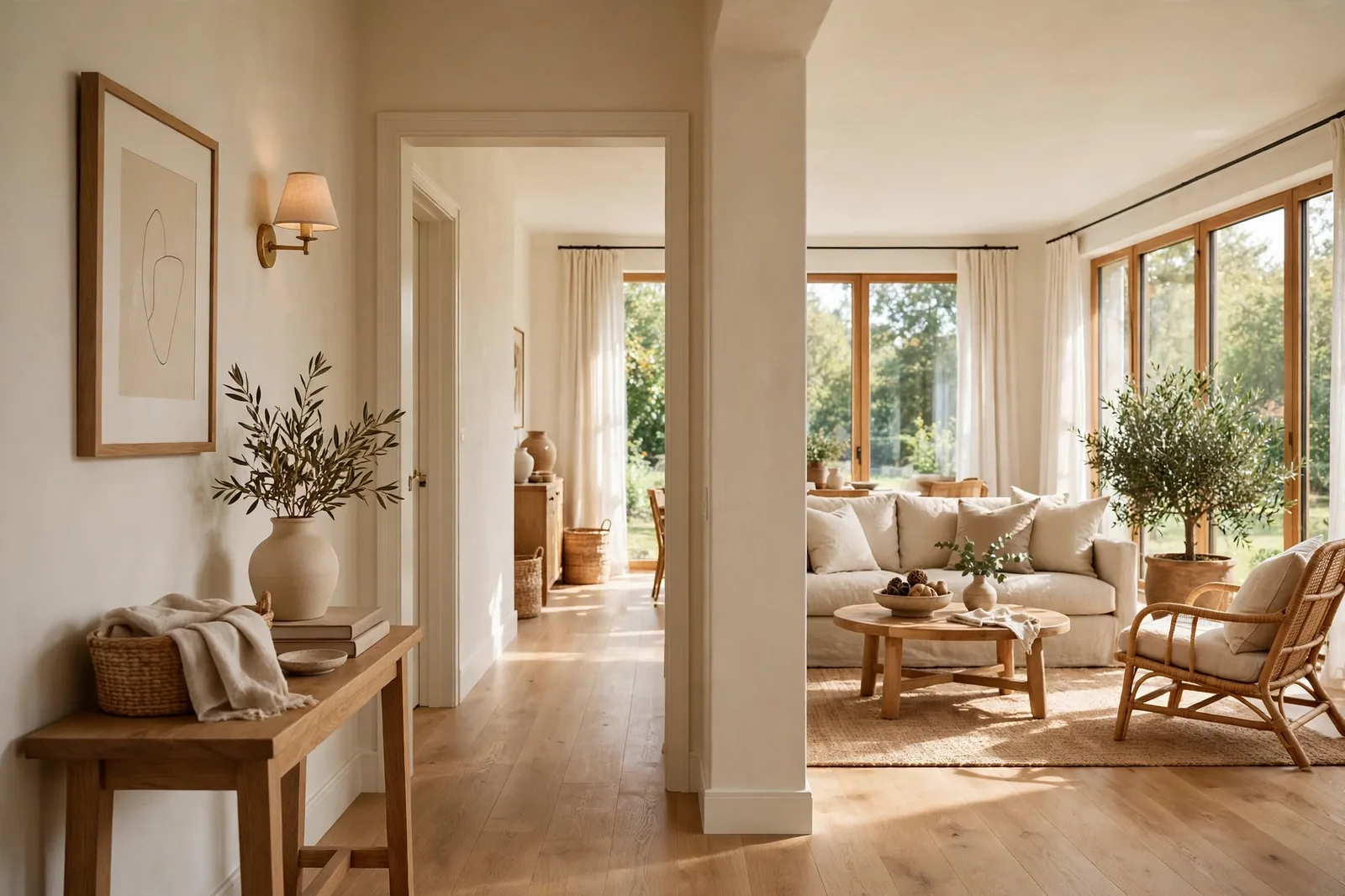
Whole-Home Color
One palette for the whole house
A cohesive home isn’t painted one room at a time, it’s planned as a system. Here are the frameworks for choosing a whole-house palette, making colors flow between rooms, and planning open-concept spaces without the guesswork.
The method in brief
Build one palette of 3–5 main wall colors plus a single trim white and one or two deep accents. Keep every color in the same undertone family. Anchor your choices to your fixed finishes, floors, cabinets, countertops, because the paint has to live next to them for years.
Then assign colors room by room, following the connection rules: let sightlines decide which colors must get along, give hallways your anchor neutral, treat open plans as one room, and put bold colors where they’re contained, powder rooms, dining rooms, front doors.
Guides in this collection
Our flagship guide to the whole-home method is in final review and publishes next:
- How to Choose a Whole-Home Paint Palette That Flows Room to Room, the 5-step method, connection rules, and testing protocol (publishing soon)
Coming soon
- How many paint colors should a house have?
- Whole-home color system templates by house style
- Color flow in open-concept homes
- The 60-30-10 rule: when it helps and when it doesn’t
- Small-space and low-light whole-home palettes
Want the finished system instead of building it yourself?
The Whole Home Paint Guide is a complete color system, every room mapped, trim and accents included, undertones already coordinated.