You’ve spent weeks finding the right color. Then someone at the paint counter asks one question, “eggshell or satin?”, and the whole project wobbles. Here’s what most people never learn: sheen changes the color itself. The same paint in eggshell and semi-gloss does not look like the same paint. Glossier finishes read darker, more saturated, and far less forgiving. Sheen also decides how your walls handle steam, fingerprints, and five years of real life. Choosing it well is the difference between a paint job that looks intentional and one that looks like it was ordered from a chart.
What sheen actually is (and the full scale)
Sheen is simply how much light a dried paint surface reflects. A flat finish absorbs light and gives you the purest, truest read of the pigment. A gloss finish bounces light back at you, and that bounce changes everything, the color reads deeper, the surface shows every flaw, and the room takes on a different energy entirely.
Every interior sheen sits on one scale. From least to most reflective:
Flat / matte, No shine. The most forgiving finish in existence: it hides bumps, patches, and uneven drywall better than anything. But it’s the least washable, scrub a flat wall and you risk burnishing a permanent shiny spot into it. Best for ceilings and low-traffic adult spaces. (Modern matte formulations are a step up from old-school flat: less chalky, easier to touch up.)
Eggshell, A whisper of sheen, like the surface of an actual eggshell. The most popular interior wall finish for good reason: it balances softness with moderate washability, hides minor imperfections well, and looks elegant on large wall surfaces. Best for living rooms, bedrooms, dining rooms, and hallways.
Satin, A soft pearl-like glow. Noticeably more durable and washable than eggshell, and it handles moisture well. The trade: it shows wall imperfections more than eggshell, so prep matters. Best for kitchens, bathrooms, children’s rooms, hallways, and any high-traffic area.
Semi-gloss, Clearly shiny. Very washable, moisture-resistant, and tough, which is exactly why it belongs on trim, doors, baseboards, window casings, and cabinets. On large walls it highlights every dent and patch and can feel harsh, so use it on walls only where function demands it (bathroom walls, backsplash-adjacent kitchen zones).
Gloss / high-gloss, Mirror-adjacent. Extremely durable and wipeable, but it magnifies every surface imperfection and demands near-perfect prep. Best in small, deliberate doses: front doors, furniture, accent details, or a single dramatic accent wall on perfectly smooth plaster.
What sheen does to your color
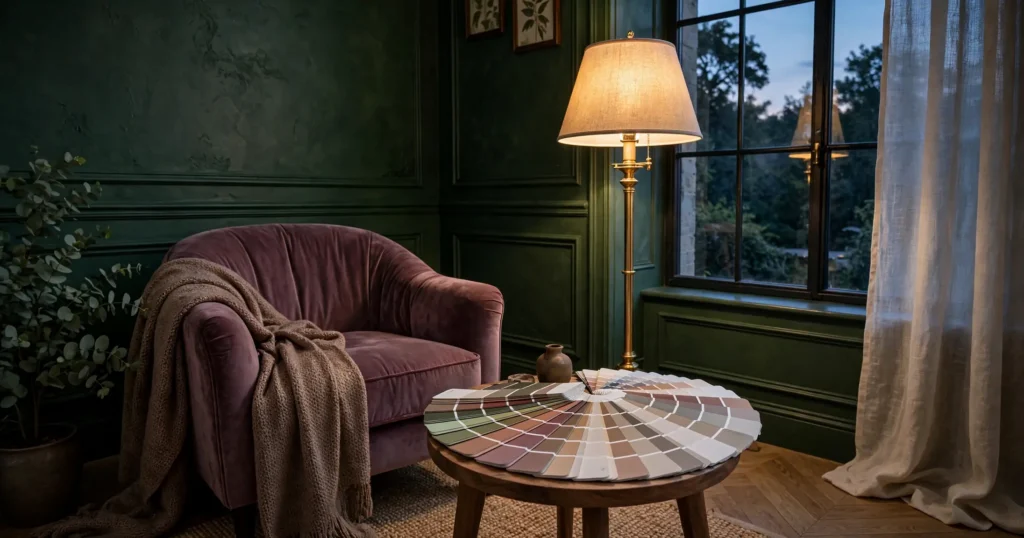
This is the part nearly every sheen guide underplays, and it’s the one that causes the most repaints. The color chip you fell in love with simulates a flat finish. The moment you go up in sheen, the color you actually get diverges from the color you chose.
Glossier reads darker. Color consultants report that the glossier the finish, the darker the paint appears to the eye, reflective sheen deepens perceived saturation. The shift can be slight or significant depending on the color and surface, but it’s real: your satin walls will read a touch deeper and richer than the same color in eggshell. If you’re choosing between sheens, know that the higher-sheen option is effectively a slightly darker version of your color.
Sheen interacts with light by direction. Natural light amplifies gloss, a satin wall in a bright south-facing room can read almost like semi-gloss by midday. Warm bulbs (2700K) soften reflections; cool bulbs (4000K) sharpen them. North-facing rooms flatten sheen, so a satin wall there reads closer to eggshell. The practical point: don’t choose sheen from a chart alone. Test it the way you’d test color, a large sample, in the room, across the day.
Gloss does not brighten a room. This is the persistent myth to retire. It feels intuitive, shiny things bounce light, so glossier walls should make a room brighter. In practice, paint gloss doesn’t have the reflectivity to meaningfully contribute to a room’s illumination the way a mirror would. What you get instead of brightness is glare: splotchy hotspots of reflected window and lamp light, not a brighter room. If a room feels dark, the answer is a lighter color and better lighting, not a glossier finish. Our natural light guide covers how to read what your room’s light is actually doing.
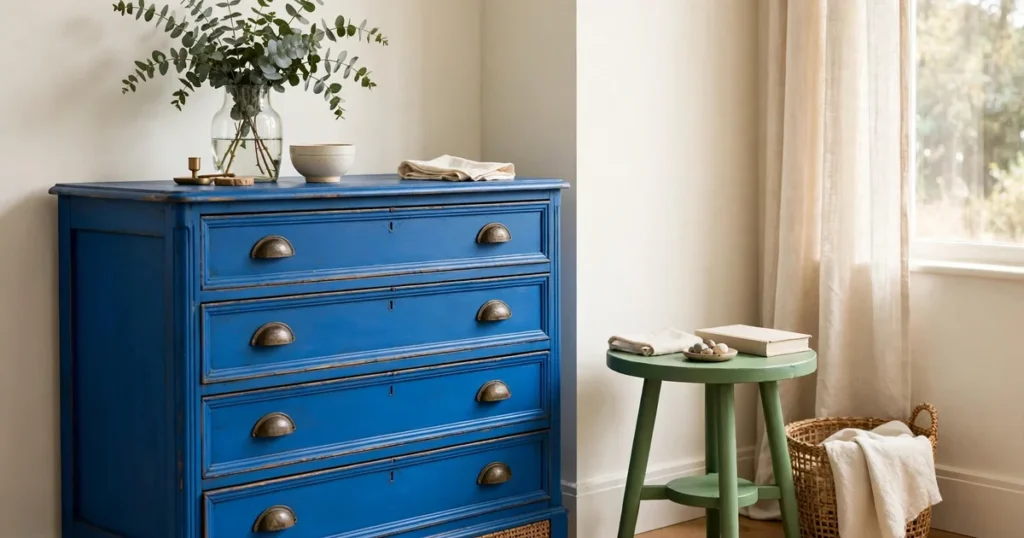
Same color, different sheen, different room. This is why your kitchen walls can look different from your kitchen cabinets even when they’re painted the same shade, the cabinet’s glossier surface alters the color’s intensity and depth. It’s also why professionals sometimes deliberately paint trim in the same color as the walls but one step up in sheen: it adds dimension and definition without introducing a new color at all.
Eggshell vs. satin: the real decision
For most homes, the entire sheen question reduces to one choice: eggshell or satin on the walls. Everything else, flat ceilings, semi-gloss trim, is close to settled convention. This is the one where people stall, so let’s settle it properly.
Eggshell is duller and closer to flat. It’s the standard for wall paint: it hides imperfections better, touches up more easily (touch-ups blend because the low sheen doesn’t flash against the old coat), and gives deep colors their best, richest look. If a room is low-traffic, has older or textured walls, or leans formal and calm, living room, dining room, adult bedroom, eggshell is the default answer.
Satin is glossier, tougher, and more washable. It stands up to fingerprints, moisture, and actual scrubbing, which is why it’s the go-to for kitchens, bathrooms, hallways, laundry rooms, and kids’ rooms. The trade is real: it shows wall flaws more, demands better prep, and touches up less forgivingly.
The honest decision framework is three questions:
1. How smooth are the walls? Older plaster, heavy texture, visible patches, eggshell, no contest. Smooth, well-prepped drywall, satin becomes viable.
2. What happens in this room? Steam, splatter, small hands, dog traffic, satin. Quiet, adult, low-contact, eggshell.
3. How deep is the color? Deeper colors look richer in lower sheens (eggshell), and their imperfections show more in satin. A moody green dining room in eggshell; a white kitchen in satin.
If you answer eggshell on two of three, it’s eggshell. If the room’s function screams durability but the walls are rough, consider satin on the trim and lower traffic zones with eggshell on the worst walls, sheen doesn’t have to be house-uniform, and mixing thoughtfully is what professionals do.
The room-by-room sheen chart
Here it is, the whole house in one chart. These are the conventions professionals default to, adjust for your walls’ condition and your household’s reality.
| Room / surface | Walls | Trim & doors | Ceiling |
|---|---|---|---|
| Living room | Eggshell | Semi-gloss | Flat |
| Bedroom (adults) | Matte or eggshell | Semi-gloss | Flat |
| Bedroom (kids) | Satin | Semi-gloss | Flat |
| Kitchen | Satin | Semi-gloss | Flat or satin |
| Bathroom | Satin | Semi-gloss | Satin (moisture) |
| Hallway & stairs | Eggshell or satin | Semi-gloss | Flat |
| Home office | Matte or eggshell | Semi-gloss | Flat |
| Laundry / mudroom | Satin | Semi-gloss | Satin |
| Dining room (formal) | Eggshell | Semi-gloss | Flat |
| Cabinets | Satin or semi-gloss (durable, wipeable) | ||
| Front door (exterior) | Semi-gloss or gloss (weather + curb presence) | ||
A few notes the chart can’t fit:
Bathroom ceilings deserve satin. Flat on a bathroom ceiling is a moisture trap, steam condenses and the finish can’t handle it. Satin on the bathroom ceiling resists moisture and wipes clean. Same logic for laundry rooms and any ceiling that sees regular steam.
Hallways are the swing vote. They’re high-traffic (satin’s case) but often have the oldest, most-patched walls in the house (eggshell’s case). If your hallway walls are rough, eggshell with a good paint formulation still wipes adequately for fingerprints, modern eggshells are far more washable than old flats.
Kitchens: satin on walls, semi-gloss on trim, and never flat anywhere. Grease, steam, and splatter are constant. Satin handles them while still looking soft; semi-gloss on trim and casings gives you surfaces you can scrub without thinking.
The three-tier system: walls, trim, ceiling
Walk into any professionally painted room and you’ll usually find the same layered sheen strategy, three tiers, each doing a job:
Tier 1, Walls: eggshell or satin. The workhorse finish. Chosen for the room’s traffic and wall condition (see Section 3).
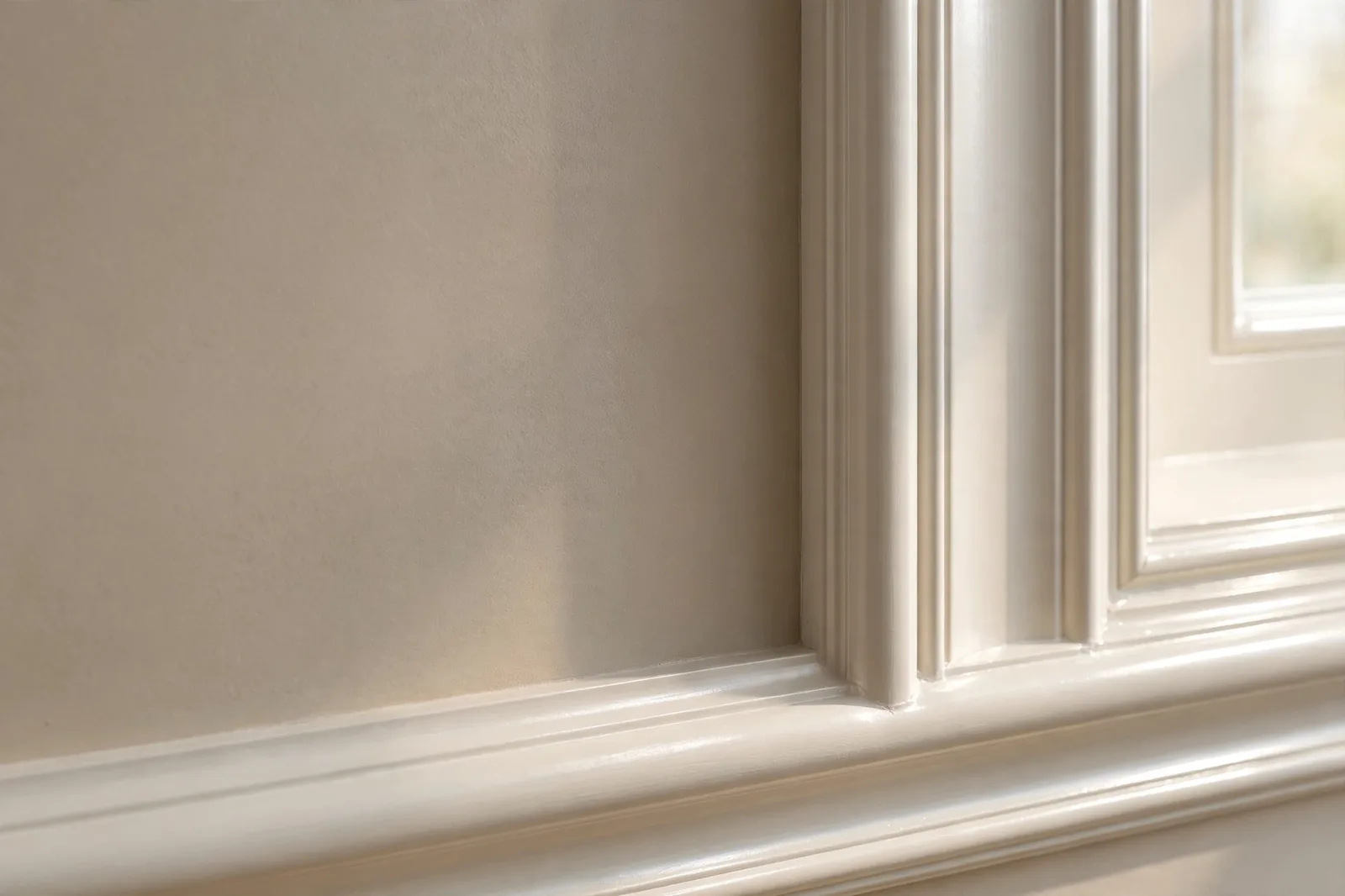
Tier 2, Trim and doors: semi-gloss. Crisp, defined, wipeable. The sheen contrast against matte walls is what makes millwork read as millwork, baseboards, casings, and doors catch light differently and stand out architecturally. This contrast also lets you keep walls and trim the same color while still getting definition, a trick designers use in all-white rooms.
Tier 3, Ceilings: flat. Ceilings catch light at the worst angles, any sheen up there turns into visible glare and shows every roller mark and drywall seam. Flat disappears overhead, which is exactly what a ceiling should do. (Exceptions: bathrooms and laundries, where satin wins on moisture grounds.)
The beauty of the three-tier system is that it coordinates the whole house without a single extra color decision. Your wall sheen can vary room by room (eggshell in the living room, satin in the kitchen) while semi-gloss trim and flat ceilings run constant, and the consistency of the trim tier is what makes the house feel finished.
One refinement worth knowing: some designers drop the trim to satin instead of semi-gloss for a softer, more contemporary look, slightly less shine, still very durable. It reads as a deliberate style choice rather than a downgrade, especially in modern and organic-modern interiors. If semi-gloss trim feels too “shiny house” to you, satin trim is the sanctioned alternative.
Mistakes, kids, pets, and exteriors
Mistake 1, Flat in a bathroom or kitchen. The most expensive sheen mistake is also the most common: flat paint where moisture and grease live. It can’t be scrubbed, it absorbs stains, and in a bathroom it can fail outright. Satin minimum wherever water or cooking happens.
Mistake 2, High-gloss on imperfect walls. Gloss is a magnifying glass. Every drywall seam, patch, and roller ridge shows up in high definition. Reserve gloss and semi-gloss walls for surfaces that are genuinely smooth, new drywall, skim-coated plaster, or keep them on trim and doors where the scale is small and the surface is milled smooth.
Mistake 3, Semi-gloss everywhere “for durability.” The durability is real, but so is the glare. A whole room in semi-gloss feels clinical and shrinks visually, all that reflected light creates hotspots instead of warmth. Durability belongs on the surfaces you touch (trim, doors, cabinets), not the surfaces you look at.
Mistake 4, Ignoring the touch-up problem. Satin and higher sheens flash when touched up, the new patch catches light differently than the aged coat. If you know you’ll be touching up (rental, kids’ rooms, hallways), eggshell is dramatically more forgiving. Professionals will tell you this is the real-world reason eggshell dominates residential walls.
Kids and pets: the honest playbook. Yes, you need washability, satin on kids’ room and hallway walls, semi-gloss on trim and doors. But the bigger wins are structural: eggshell or satin in a mid-tone color hides marks better than any sheen in bright white; a washable paint formulation matters as much as the sheen tier; and keeping one consistent trim sheen house-wide makes touch-ups a single-can job.
Exteriors have their own rule. Outside, function outranks aesthetics more than anywhere: satin or an eggshell on the heavy side of the sheen range for the body (durable, sheds weather, doesn’t look plasticky), semi-gloss or gloss for the front door and shutters. One pro nuance worth knowing: darker colors read as having more sheen than lighter ones, so on a dark exterior body color, drop to eggshell to avoid an unintended glossy look, and reserve satin for lighter mid-value colors.
Choosing sheen is easier inside a whole system
The Paint Color Workbook walks you through every finish decision room by room, wall, trim, and ceiling sheens mapped alongside your colors, plus sampling checklists so you test the actual sheen before you buy the gallons.
Frequently asked questions
Flat or matte, no contest. The absence of reflected light means bumps, patches, and uneven texture visually disappear. Every step up the sheen scale shows more of the wall’s true condition, which is why older or textured walls almost always belong in flat, matte, or eggshell.
Not necessarily, satin on walls is a soft pearl glow, not a shine. It works in living rooms that see real traffic (kids, pets, entertaining). The cases against it: rough or patched walls (it will show them), very deep colors (they look richer in eggshell), and touch-up frequency (satin patches flash more than eggshell).
You can in a low-moisture powder room, but in a full bath with a shower, satin is the safer choice, it handles steam and wipes clean without breaking down. Either way, use satin (not flat) on the bathroom ceiling, and make sure the room has working ventilation regardless of sheen.
Yes, color chips simulate a flat finish, and every step up in sheen deepens the perceived color slightly while adding reflective glare. The same paint in eggshell and semi-gloss will not look like the same paint on your wall. Always test the exact sheen you plan to buy, in the room’s actual light.
Flat, almost always, it hides roller marks and drywall seams and eliminates glare from overhead light hitting at bad angles. The two exceptions: bathrooms and laundry rooms, where satin handles moisture and wipes clean. Never semi-gloss or gloss on a ceiling unless you’re making a deliberate mirrored-ceiling statement.
Yes, professionals do it routinely. The classic layering is matte or eggshell walls, semi-gloss trim and doors, flat ceiling. You can even paint walls and trim the same color in different sheens for subtle dimension. The rule is intention: each surface gets the sheen its function and light deserve.